
You’re just home with your baby. Despite all the newborn advice you’ve received and everything you learnt before the birth, you still have plenty of questions on things which hadn’t crossed your mind until now. Find all the answers you need in this article! And don't worry, you’re doing amazingly well.
1. How many hours should a newborn sleep? Is it normal for young infants to sleep most of the time?
During the first few weeks of their life, a newborn baby can spend up to 20 hours per day sleeping. Don't worry, it's completely normal!2. My newborn infant is constantly moving while sleeping – is this normal?
Absolutely! Newborn sleep patterns are very different from ours: they go in and out of REM sleep continuously, and sleep less deeply.Newborn babies wriggle about while they sleep, they move around, squirm and whimper as their brain is active: they’re dreaming and releasing all the tension accumulated from new stimuli they’ve received while awake.

3. Why is it that my newborn will not stop crying in the evening?
During their first few weeks of life, newborns experience an overload of stimuli, which they are not used to receiving, let alone managing. That’s why babies are particularly tired and fussy towards the end of the day and cry inconsolably: they need to release the tension built up throughout the day, and also need to feel relaxed, safe and comforted before falling asleep.The advice for newborn parents is to stay calm and not get flustered, otherwise your baby will pick up on it too!
4. When to give a newborn their first bath?
Let's talk about baby hygiene and newborn first bath during those first days home with a newborn! You shouldn’t bathe your infant until their umbilical stump has come away, usually about a week after the birth.Before the cord falls off, you can use lukewarm water and cotton wool or a muslin cloth for washing a newborn.
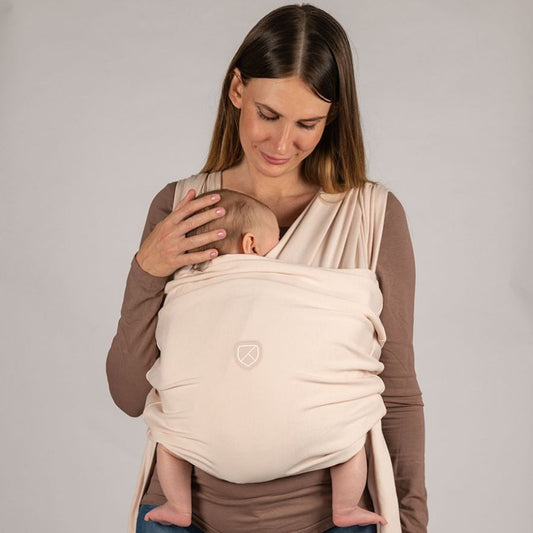
5. Can I use a baby carrier wrap from birth?
Not all infant slings are the same, but if you opt for a cotton stretchy newborn wrap, such as Koala Babycare's stretchy wrap carrier, you can use this type of baby carrier from birth.6. What to do if your newborn brings up milk?
Generally speaking, one or two episodes of vomiting in newborn babies within the space of a day can happen frequently and isn’t usually cause for concern.However, it’s important to monitor your baby carefully when your newborn is being sick and make a note of how often it happens, the colour and how long it lasts, so that you always have a clear picture.
7. Newborn blocked nose: how to clear your baby’s nose?
Before you start, make your baby feel comfortable. Cuddle them, wrap them up in their favourite muslin cloth. Once your baby is calm and relaxed, you can commence the nasal wash: gently tilt their head to one side, insert the nozzle of the nasal spray or single-dose bottle into the top nostril and slowly dispense the solution. The solution will flow out through the other nostril.
8. How much weight should a newborn be gaining?
To give you an average reference on weekly weight gain, consider that your baby should gain around 150g per week.
However, this is just a guide, as weight gain in newborns can vary from week to week with large fluctuations.
What’s most important is that your infant continues to grow steadily week by week. For reference, you can look at the NHS guidelines on growth chart for newborns.
9. How can I vary my baby's position during the day?
There are several things you can do to vary your baby's position during the day. Here are a few ideas:
Limit the amount of time your baby spends lying down, wherever possible. You could try using an infant carrier sling.Use a nursing pillow and alternate the direction of your baby's crib in respect of your own bed.When your baby is awake and being supervised, use a pillow from our Koala Perfect Head range.
10. When to start tummy time?
Right away! Start by holding your baby on your belly, skin-to-skin. Your newborn baby will try to look at your face and follow your voice with their gaze.
As they grow, you can use a baby play mat and Koala Hug Baby for Tummy Time, together with a few toys to encourage your infant to lift their head up.